
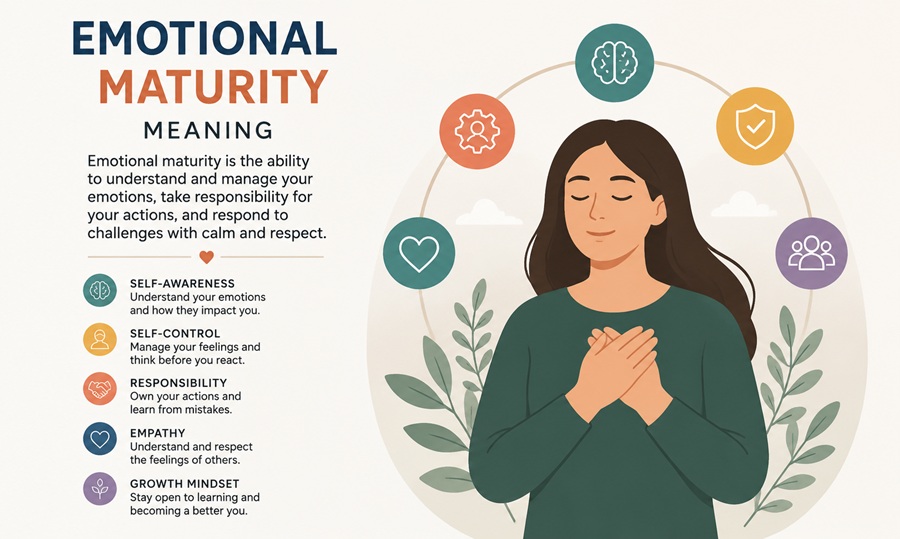
Rather than defining emotional maturity in the abstract, it’s more useful to run it through a practical lens: where does it actually show up, and where might you be falling short without realizing it?
A Self-Check, Not a Definition
Ask yourself honestly how you’d respond in each of these situations. There’s no scoring system here — just a way to notice patterns.
☐ When someone criticizes my work, my first instinct is to listen before responding defensively ☐ When I’m upset, I can usually name the specific feeling, not just “I’m fine” or “I’m annoyed” ☐ I’ve apologized recently without adding a “but” or an excuse afterward ☐ I can sit with a friend’s bad news without immediately trying to fix it ☐ When a plan falls through, my reaction matches the size of the actual problem ☐ I can disagree with someone I care about without needing them to concede completely ☐ I notice when I’m projecting a bad mood from one part of my day onto an unrelated situation
If several of these feel like a stretch rather than a natural description of you, that’s not a failure — it’s simply where the growth edge currently sits.
Where Emotional Maturity Tends to Show Up First
It rarely shows up as a grand transformation. More often, it shows up in small, almost invisible moments:
- The six-second pause before responding to an annoying text
- Choosing to ask “what did you mean by that” instead of assuming the worst
- Noticing you’re about to say something out of hurt, and holding it back until you’ve cooled down
A Common Misconception Worth Correcting
Many people equate emotional maturity with suppressing emotion entirely — staying calm no matter what. That’s actually closer to emotional avoidance than maturity. The mature version still feels the full weight of anger, hurt, or disappointment; it just doesn’t let that feeling drive behavior unchecked.
Building It Deliberately
- Name the feeling out loud, even just to yourself, before reacting
- Ask a clarifying question instead of assuming intent in an ambiguous situation
- Practice the apology that doesn’t include a justification tacked on
- Sit with discomfort for a few minutes before deciding how to respond to it
- Notice patterns — do certain situations reliably trigger an outsized reaction? That’s worth examining, not just managing in the moment
A Quick Reference Table
| Trigger Situation | Immature Pattern | Mature Pattern |
|---|---|---|
| Getting unexpected criticism | Defensive shutdown | Listening, then responding |
| A friend cancels plans | Resentment, passive-aggression | Direct, calm conversation |
| Feeling insecure | Seeking constant reassurance | Naming the insecurity directly |
| Being wrong | Denial or over-apologizing | Simple, direct accountability |
Why This Matters Beyond Relationships
Emotional maturity affects far more than romantic partnerships — it shapes how conflicts at work get resolved, how friendships survive disagreements, and even how you handle setbacks alone, without anyone else involved at all.
Frequently Asked Questions
Is emotional maturity something you’re born with?
No — it’s built through experience, reflection, and often through relationships that require repair after conflict.
Can therapy help build emotional maturity?
Very much so — much of therapy is essentially practicing the skill of noticing a feeling and choosing a response rather than reacting automatically.
Does age guarantee emotional maturity?
Not at all — plenty of older adults handle conflict worse than some younger people who’ve had to build the skill earlier out of necessity.
How can I tell if I’m emotionally immature in a specific relationship?
Notice your patterns specifically within that relationship — sometimes maturity varies context to context, showing up at work but not at home, for example.
What’s the fastest way to start improving this?
Practicing the pause — even five seconds — between feeling triggered and responding, applied consistently, tends to compound quickly.
Closing Thought
Emotional maturity isn’t a fixed trait you either have or don’t. It’s closer to a set of small, repeatable habits — noticing, naming, pausing — that anyone can build with enough deliberate practice.