
| QUICK ANSWER
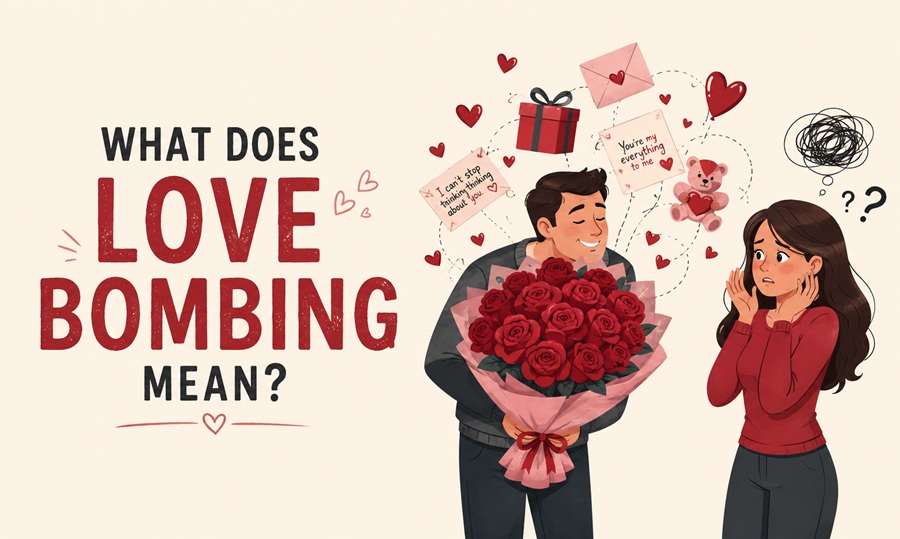
Love bombing is a pattern of excessive early affection, attention, and grand gestures used to quickly create emotional attachment, often followed by a shift in behavior once that attachment is established. It differs from genuine early-relationship excitement mainly in intensity, speed, and what happens after the initial phase. |
What Love Bombing Actually Means
Love bombing describes a pattern where someone floods a new partner with intense affection, constant communication, and grand romantic gestures early in a relationship, well beyond what the length or depth of the connection would typically call for. Talk of soulmates, moving in together, or a future by the second or third date isn’t automatically a red flag on its own, but it becomes one when it’s paired with pressure, isolation, or a noticeable shift once the other person is emotionally invested.
The term is used both casually, to describe someone who’s just very enthusiastic early on, and more specifically, to describe a manipulation pattern. The distinction matters, because not everyone moving fast is doing it with bad intentions.
The name comes from the idea of being figuratively bombarded with affection, and it’s meant to capture that specific feeling of being overwhelmed rather than simply flattered. Genuine enthusiasm early in a relationship still leaves room to breathe. Love bombing, by contrast, tends to feel like it’s moving faster than you can actually process.
How Love Bombing Usually Unfolds
The pattern tends to move through a few recognizable stages. It starts with an intense, almost overwhelming amount of attention and affection, often faster than the relationship’s actual timeline would suggest. Once that attention has created a strong emotional bond and the other person feels genuinely invested, the behavior shifts, sometimes gradually and sometimes abruptly, leaving the person on the receiving end confused about what changed. In more concerning cases, that shift is followed by a cycle of pulling back and then reeling the other person back in, which can make the relationship feel unstable in a way that’s hard to name at first.
Signs of Love Bombing
- Declarations of love, soulmate language, or future planning within days or weeks of meeting
- Constant contact that feels overwhelming rather than exciting, including getting upset over slow replies
- Excessive gifts, compliments, or gestures that feel disproportionate to how long you’ve known each other
- Pressure to define the relationship, move in together, or commit far earlier than feels comfortable
- Subtle attempts to pull you away from friends or family under the guise of wanting more time together
- A noticeable shift in warmth or attentiveness once you’ve expressed strong feelings back
- Discomfort or pushback when you try to slow things down or set a boundary
Why Love Bombing Happens
The behavior serves a purpose, whether or not the person doing it is fully aware of it. Intense early affection creates a fast emotional bond, and once that bond exists, it becomes harder for the other person to walk away, question inconsistencies, or set boundaries without feeling like they’re the one being unreasonable. In some cases it’s tied to a broader pattern of controlling behavior. In others, it comes from someone who genuinely gets swept up quickly but hasn’t learned to pace themselves, which is why intent can be hard to read from the outside.
Love Bombing vs. Genuine Early Affection
| Genuine Early Affection | Love Bombing |
| Builds gradually as trust develops | Arrives all at once, often within days |
| Respects a slower pace if you ask for one | Pushes back or guilts you for wanting to slow down |
| Stays fairly consistent over time | Sharply drops off once you’re emotionally invested |
| Leaves room for your existing relationships | Subtly discourages time with friends or family |
| Feels good without a sense of pressure | Feels flattering but also slightly overwhelming |
How to Respond If You Notice It
- Slow the pace deliberately, even if it feels like you’re being asked to move faster
- Pay attention to how they react when you set a small boundary, since that reaction tells you more than their words do
- Keep spending time with friends and family rather than letting the relationship absorb all your attention
- Give it time before making any big decisions, like moving in together or meeting each other’s whole family
- Trust a gut feeling that something is moving too fast, even if you can’t immediately explain why
| TIP
A relationship built on genuine connection can handle a slower pace. If suggesting one causes conflict, guilt, or pressure, that reaction is more informative than anything said in the early weeks. |
Why Love Bombing Can Be Hard to Spot in the Moment
Part of what makes this pattern effective, whether or not it’s deliberate, is that it feels good while it’s happening. Constant attention and grand gestures are genuinely flattering, and most people don’t want to second-guess something that feels like real connection. The confusion usually shows up later, once the intensity fades and it’s harder to reconcile the version of the relationship from the first few weeks with how things feel afterward. That gap is often the clearest signal in hindsight, even when it was nearly impossible to see from the inside.
When to Take It More Seriously
Love bombing on its own doesn’t automatically mean someone is dangerous, but it’s worth taking more seriously when it shows up alongside other patterns, like jealousy, controlling behavior, or attempts to isolate you from your support system. Those combinations tend to be a stronger signal than intensity alone, and if a relationship starts to feel confusing or like you’re constantly managing someone else’s emotions, it’s worth talking it through with someone you trust outside the relationship.
Trusting your own timeline is also worth mentioning here. There’s no rule that says affection has to be returned at the same pace it’s given, and a partner who’s actually invested in a healthy relationship will generally understand that trust and comfort take longer to build than a few good weeks together.
It also helps to remember that noticing the pattern isn’t the same as assuming the worst about someone. Slowing things down, asking direct questions, and paying attention to how they respond gives you real information either way, whether that confirms the relationship is healthy or tells you it’s worth reconsidering.
Frequently Asked Questions
Is love bombing always intentional manipulation?
Not always. Some people genuinely get swept up quickly without malicious intent, but the pattern is still worth watching, since the effect on the relationship can be similar either way.
How fast is too fast when it comes to affection?
There’s no exact timeline, but talk of a long-term future, constant contact, or major commitments within the first few weeks is worth noticing, especially if it comes with pressure to keep pace.
What usually happens after the love bombing phase ends?
Affection and attentiveness often drop off noticeably once the other person feels secure that you’re emotionally invested, which can feel confusing or destabilizing if you weren’t expecting the shift.
Can love bombing happen in friendships, not just dating?
Yes. The same pattern of intense early attention followed by a shift can show up in friendships and other relationships, not only romantic ones.
What should I do if I think I’m being love bombed?
Slow the pace on purpose, keep up your other relationships, and pay close attention to how the person responds when you set a small boundary or ask to take things slower.