
| QUICK ANSWER
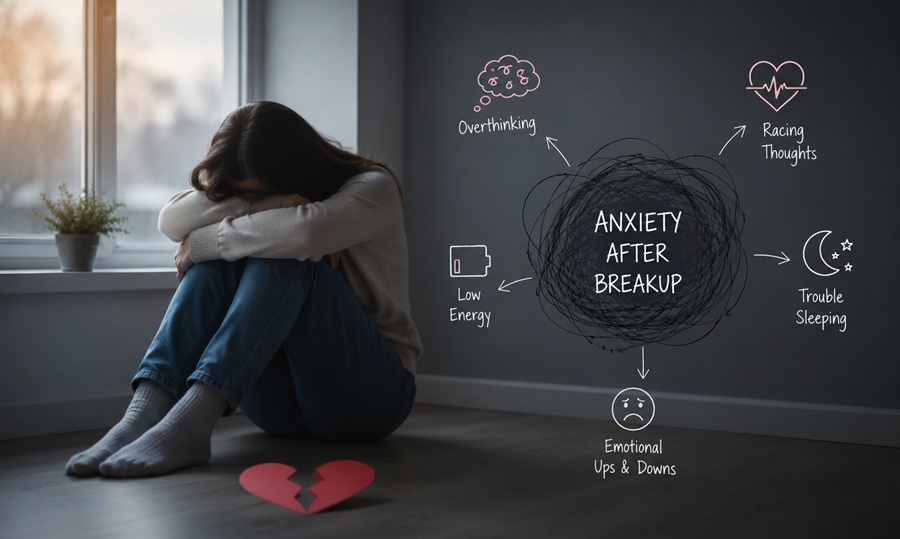
Anxiety after a breakup is a common stress response triggered by the sudden loss of routine, attachment, and predictability. It typically peaks in the first few weeks and gradually eases as new patterns form, though it can resurface around anniversaries or reminders. |
Why Breakups Trigger Anxiety
Loss of attachment
Romantic bonds activate the same brain systems involved in other close attachments. When that bond breaks, the nervous system reacts as if a source of safety has disappeared, even when the relationship wasn’t healthy.
Disrupted routine
Daily texts, weekend plans, and shared decisions vanish overnight. That sudden structural gap alone can produce restlessness and a low-grade sense of unease.
Uncertainty about the future
Anxiety thrives on unresolved questions. ‘What happens now,’ ‘did I make the right choice,’ and ‘will I be okay’ are common intrusive thoughts in the days following a split.
Common Symptoms
- Racing thoughts, especially at night
- Difficulty concentrating at work or school
- Checking your phone compulsively for a message
- Appetite changes — eating too little or too much
- Physical tension: tight chest, shallow breathing, restlessness
- Urge to check their social media repeatedly
How Long Does It Usually Last?
The first two weeks
This is typically the most intense period, often described as acute grief. Sleep and appetite disruptions are common here.
Weeks three through eight
Anxiety usually becomes less constant, arriving in waves rather than a steady background hum. Good days start to outnumber bad ones.
Beyond two months
For most people, day-to-day anxiety fades substantially by this point. If it hasn’t, or if it’s interfering with basic functioning, it may be worth talking to a therapist.
Coping Strategies That Actually Help
Rebuild structure quickly
A predictable routine — regular sleep, meals, and exercise — gives your nervous system something stable to hold onto while everything else feels uncertain.
Limit contact and social media checking
Repeated exposure to an ex’s updates keeps the wound active. A temporary break from following them, even just muting, tends to shorten the anxious phase.
Name the feeling instead of fighting it
Anxiety softens when it’s acknowledged rather than resisted. Simply noting ‘this is anxiety, it will pass’ can reduce its intensity in the moment.
Lean on your support system
Isolation amplifies anxious thoughts. Regular contact with friends or family — even brief check-ins — provides both distraction and reassurance.
When to Seek Professional Support
If anxiety persists for months, disrupts sleep or work consistently, or comes with panic attacks, a therapist can help. This is especially worth considering if anxiety was already present before the relationship ended, since a breakup can amplify pre-existing patterns.
FAQs
Q: Is anxiety after a breakup normal?
Yes, it’s one of the most common emotional responses to a breakup and reflects a real disruption to attachment and routine, not a personal weakness.
Q: Why do I feel anxious even though I wanted the breakup?
Even relationships you’re relieved to leave involved routine and attachment. The nervous system can still react to the loss of familiarity regardless of whether the breakup was the right decision.
Q: Does no-contact help with breakup anxiety?
For most people, yes — reduced contact removes triggers that keep reactivating the anxiety response, giving the nervous system time to settle.
Q: Can breakup anxiety turn into depression?
For some people it can, particularly if isolation and rumination continue for an extended period. Persistent low mood alongside anxiety is worth discussing with a professional.
Q: Will I always feel this anxious?
No. For most people, intensity decreases significantly within a couple of months as new routines and a sense of stability return.