
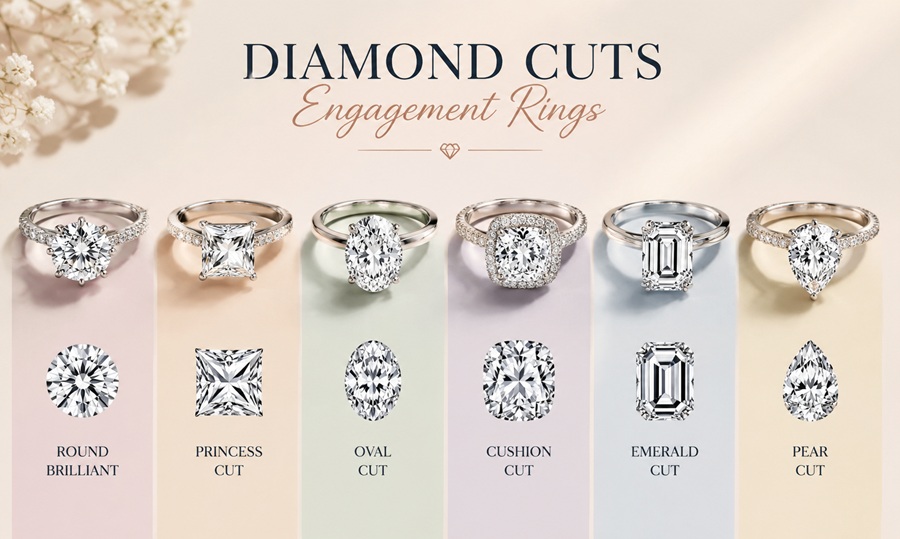
Diamond cut refers to a stone’s facet pattern and how it reflects light — distinct from its shape (round, oval, princess, etc). Round brilliant cuts offer the most sparkle and highest price per carat, while shapes like oval and emerald offer a larger visual size for the same carat weight.
“Cut” and “shape” get used interchangeably in casual ring shopping, but they’re technically different things. Shape refers to the outline of the stone — round, oval, princess, and so on. Cut refers to the precision of the facets within that shape, which determines how much the diamond actually sparkles. Both matter, and this guide covers the shapes most commonly chosen for engagement rings along with how each affects price and appearance.
Comparing Popular Diamond Shapes
| Shape | Brilliance | Relative Price | Best For |
| Round | Highest — maximum light return | Highest per carat | Classic, timeless look; most forgiving of minor flaws |
| Princess | High, square facet pattern | Mid-range | Modern look, slightly more affordable than round |
| Oval | High, elongated brilliance | Mid-range | Appears larger than its carat weight; flattering on most hands |
| Cushion | Soft, romantic sparkle | Mid-range | Vintage-inspired aesthetic |
| Emerald | Lower brilliance, clarity-forward | Lower per carat | Showcases clarity; requires higher clarity grade to hide flaws |
| Pear | High, teardrop brilliance | Mid-range | Elongating effect, distinctive silhouette |
| Marquise | High, elongated | Lower per carat | Maximizes apparent size for the carat weight |
How Cut Quality Affects Price
Within any given shape, cut quality (typically graded Excellent through Poor by labs like GIA) has an outsized effect on how the diamond actually looks, sometimes more than carat weight. A well-cut smaller diamond frequently appears more brilliant — and more expensive-looking — than a larger, poorly cut one, which makes cut quality one of the few areas worth prioritizing spending on.
Cut vs. Shape: Don’t Confuse the Two When Shopping
When a jeweler references “cut grade,” they mean facet precision, not the diamond’s outline shape. A round diamond can have a poor cut grade, and an emerald-shaped diamond can have an excellent one. Ask specifically for the cut grade certificate (from GIA or AGS) rather than assuming shape and cut quality are the same conversation.
Buying Tips by Priority
- If sparkle matters most: prioritize round or oval with an Excellent cut grade
- If apparent size matters most: choose an elongated shape like oval, marquise, or pear
- If budget matters most: emerald and marquise cuts offer more visual size per dollar
- If a vintage aesthetic matters most: cushion or old European cuts fit best
- Always request the certified cut grade, not just the shape, before purchasing
| NOTE
Fluorescence, a separate diamond characteristic, can make some stones appear slightly hazy in direct sunlight. It’s worth viewing any diamond in natural daylight before finalizing a purchase, regardless of shape. |
How Hand Shape Affects Which Cut Looks Best
Beyond personal taste, hand and finger shape genuinely affects how different cuts look when worn. Elongated shapes like oval, marquise, and pear tend to visually lengthen shorter fingers, while round and cushion cuts tend to suit longer fingers particularly well since their fuller shape balances the finger’s length. This isn’t a strict rule, but it’s a useful factor to consider alongside personal style preferences when trying on rings in person.
Understanding Setting Choice Alongside Cut
The setting — how the diamond is mounted — interacts closely with cut choice. A prong setting exposes more of the stone to light, maximizing brilliance for cuts like round or oval that are chosen specifically for sparkle. A bezel setting, which wraps metal around the stone’s edge, offers more protection for the diamond and works particularly well with emerald or Asscher cuts, which already prioritize clarity over maximum brilliance.
Diamond Alternatives Worth Knowing
| Alternative | Comparison to Diamond |
| Moissanite | More affordable, higher fire (rainbow flashes), slightly less hardness |
| Lab-grown diamond | Chemically identical to mined diamond, 30–50% lower cost |
| Sapphire | Highly durable, wide range of colors beyond traditional blue |
| Morganite | Softer stone, popular for its warm pink tone, less scratch-resistant |
Antique and Vintage Cuts
Beyond modern cuts, antique styles like the old European cut and old mine cut have seen renewed popularity among couples drawn to a vintage aesthetic. These older cutting styles produce a softer, warmer sparkle with larger facets compared to modern brilliant cuts, which are engineered for maximum light return under a wider range of lighting conditions. Sourcing a genuine antique stone requires working with a jeweler experienced in vintage pieces, since reproductions are common and priced very differently from authentic antique diamonds.
Working With a Jeweler on Cut Selection
A good jeweler will let you compare multiple cuts side by side under the same lighting conditions, rather than describing differences purely in the abstract. If a jeweler seems reluctant to show you the actual certification or discourages side-by-side comparison, that’s worth treating as a signal to shop elsewhere, since transparency about cut grade and certification is standard practice among reputable diamond sellers.
The four Cs — carat, cut, color, and clarity — interact rather than operate independently, and understanding that interaction helps prioritize spending. A diamond with excellent cut quality can make a lower color or clarity grade look more brilliant than the grade alone would suggest, since superior faceting maximizes light performance regardless of minor color tint or internal characteristics. This is why many jewelers recommend prioritizing cut quality first, then adjusting carat, color, and clarity based on remaining budget, rather than maximizing carat weight at the expense of cut.
Common Mistakes When Shopping for Diamond Cuts
- Focusing on carat weight alone while ignoring cut grade entirely
- Assuming shape and cut quality are the same specification
- Skipping the natural daylight viewing step before purchase
- Not asking about the specific certification lab (GIA and AGS are the most rigorous)
- Choosing a setting without considering how it interacts with the chosen cut’s light performance
- Decide on shape based on personal style and hand shape
- Request the certified cut grade, not just carat and shape
- View the stone in natural daylight before purchasing
- Compare setting options for how they interact with your chosen cut
- Confirm return, resizing, and warranty policies before finalizing
Frequently Asked Questions
What’s the difference between diamond cut and diamond shape — Shape is the outline (round, oval, etc); cut is the facet precision that determines how much a diamond sparkles.
Which diamond cut is the most expensive per carat — Round brilliant typically commands the highest price per carat due to demand and the amount of rough diamond lost in cutting.
Which diamond shape looks biggest for the money — Elongated shapes like oval, marquise, and pear tend to appear larger than their actual carat weight.
Does cut quality matter more than carat weight — For overall appearance, many jewelers recommend prioritizing cut quality, since it has an outsized effect on brilliance.
What cut grade should I look for — An Excellent or Very Good cut grade from a recognized lab like GIA is generally recommended for the best light performance.
Does hand shape affect which diamond cut looks best — Yes — elongated cuts tend to visually lengthen shorter fingers, while fuller cuts like round or cushion suit longer fingers well.
Is moissanite a good alternative to diamond — It’s a popular, more affordable alternative with notably higher fire, though it’s slightly softer than diamond.
The right diamond cut comes down to priorities — sparkle, apparent size, budget, or aesthetic — more than any single “best” answer. Whatever shape you land on, prioritizing a strong cut grade will do more for the ring’s overall look than almost any other single decision.