
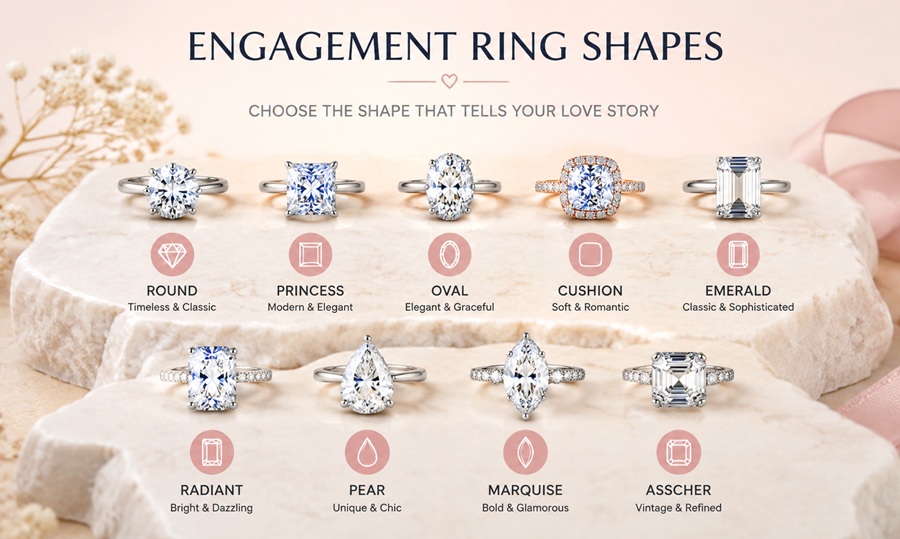
Ring “shape” and ring “cut” get used interchangeably, but they’re not quite the same thing — shape refers to the outline (round, oval, emerald), while cut refers to how the facets are arranged to catch light. Here’s a shape-by-shape breakdown.
Quick Answer: Round brilliant is the most popular and most expensive per carat due to higher demand and more cutting waste, while shapes like oval, pear, and emerald tend to look larger for the same carat weight and cost somewhat less. The right shape depends more on personal style and finger shape than any universal “best” option.
Round Brilliant
The classic choice, and still the most popular by a wide margin. Round cuts maximize brilliance — the sparkle you see under light — better than any other shape, thanks to a facet pattern refined over decades specifically for this purpose. The trade-off: round stones waste more of the rough diamond during cutting, which drives the price up compared to other shapes at the same carat weight.
Oval
Oval stones have surged in popularity recently, largely because they appear larger than their actual carat weight compared to round stones, while still offering strong brilliance. They also tend to elongate the finger visually, which is part of their appeal.
Emerald Cut
A rectangular shape with step-cut facets rather than brilliant-cut ones, giving it a more subtle, glassy sparkle instead of intense fire. Because the cut shows inclusions more easily than a round brilliant, buyers often need to prioritize clarity slightly more when choosing an emerald cut stone.
Cushion
A softened, pillow-like square shape that blends vintage charm with modern brilliance. It’s a strong middle ground for anyone who likes the classic feel of a round stone but wants something slightly less common.
Pear
Essentially a teardrop, combining elements of round and marquise shapes. It also visually elongates the finger and tends to photograph particularly well, which has driven a lot of its recent popularity.
Princess
A square shape with brilliant-cut facets, offering strong sparkle at a lower price point than round for a similar visual impact, since it wastes less of the rough stone during cutting.
Marquise
An elongated, pointed-oval shape that tends to maximize apparent size for its actual carat weight more than almost any other cut, making it a popular choice for buyers prioritizing visual size within a set budget.
A Full Comparison Table
| Shape | Sparkle Level | Apparent Size | Relative Cost | Best For |
|---|---|---|---|---|
| Round | Highest | True to carat | Highest | Classic, timeless style |
| Oval | High | Larger than actual | Moderate | Elongating fingers |
| Emerald | Subtle, glassy | True to carat | Moderate-low | Vintage, art-deco style |
| Cushion | High | True to carat | Moderate | Soft vintage look |
| Pear | High | Larger than actual | Moderate | Unique, elongating |
| Princess | High | True to carat | Lower | Budget-conscious brilliance |
| Marquise | Moderate | Largest apparent size | Lower | Maximum visual size |
Choosing Based on Finger Shape
- Shorter or wider fingers often pair well with elongated shapes like oval, pear, or marquise
- Longer fingers can wear virtually any shape without visual trade-offs
- Petite hands sometimes suit smaller, more compact shapes like cushion or round better than very elongated ones
Durability Considerations
Shapes with sharp points — pear, marquise, princess — have more vulnerable corners prone to chipping and typically need protective prong settings. Round and oval shapes distribute wear more evenly and tend to hold up better long-term with less specialized care.
Frequently Asked Questions
Which shape looks the biggest for the lowest cost?
Marquise and pear shapes tend to have the largest visual footprint per carat, since their elongated shape maximizes surface area.
Is round really the most expensive shape?
Yes, generally — higher demand and more cutting waste both push round diamonds above other shapes at equivalent carat weight and quality.
Which shape is the most durable day-to-day?
Round and oval, since they lack the sharp, exposed corners of shapes like princess, pear, or marquise.
Does shape affect resale value?
Somewhat — round diamonds tend to hold resale value slightly better due to consistently higher demand.
Can I combine shapes, like a pear-shaped center stone with round side stones?
Yes, this is common in more elaborate settings and can balance sparkle with a unique overall look.
There’s no objectively “best” shape — just the one that fits your partner’s style, hand shape, and how much sparkle-per-dollar matters to you. Round wins on tradition and brilliance; oval, pear, and marquise win on apparent size for the price.